Selasa, 01 Februari 2011

2010 Medium Length Curly Hairstyles for Women

melina kanakaredes curly  hair styleMelina has fabulous curls that are cut to shoulder length, with framing angles. This cut helps broaden her smaller face and her curly hair is a good choice for her long shaped face.
2010 Medium Length Curly Hairstyles
for Women
melina kanakaredes curly  hair stylemelina kanakaredes hair style
for curly hair
melina kanakaredes curly  hair style2010 Medium Length Curly Hairstyles
for Women
melina kanakaredes curly  hair style2010 Medium Length Curly Hairstyles
for Women

Minggu, 30 Januari 2011

Coconut Oil For Your Great Hair

Stop using harsh chemicals on your hair and scalp your causing your hair to thin and it will start falling  out or you will get dandruff, Coconut oil works great on the hair. I have discovered the benefits of coconut oil. It’s natural, healthy and inexpensive too. And I’ll explain in this article how to use coconut oil on your hair.


 Have you ever seen pic’s of the women from the Polynesian Islands, they have long silky beautiful  hair. Yes they eat a lot of coconuts  but they also apply coconut oil to their hair.

Once you start using coconut oil or coconut butter as some people call it, you’ll no doubt want to get rid of all the expensive conditioners and creams and mousses you’re using for your hair. Coconut oil will give your hair a lot of tons of body, coconut oil will protect it and control  breakage of your hair,  and this will give you less hair thinning. Of course, many hair stylists who know about it want to keep this secret for themselves. Why because they make a ton of profit from selling hair conditioners,. But the word is slowly getting out.

Here’s how to use coconut oil as a hair conditioner,  I like to warm it up a little bit and then simply massage it into my hair right before bedtime. You can hold some in your hands for a few moments if you don’t have the means or the time to heat it. Coconut oil will melt fast. You only need about two teaspoons or so.
In the morning just shower and wash it right out. I  use organic virgin coconut oil because it is the highest  quality. When you buy coconut oil online or in a whole foods store, make sure it hasn’t been refined, bleached and deodorized. You want the unrefined kind. One way to tell if it is unrefined is to make sure it smells like coconuts, makes sence right?

For a great salon-type hair treatment you can apply the coconut oil, next put on a shower cap, and then wash it out in about an hour. If you have a dandruff problem apply one to two teaspoons to your scalp and gently massage it in. Your shampoo may be causing your dandruff so you may want to find a shampoo with fewer chemicals.

You can also use coconut oil for a shampoo but only use a little bit and mix with your regular shampoo in the palm of your hand. You can also put a tiny bit on your hair using your fingertips after you style it.
This should give you a good idea how to use coconut oil on your hair as a hair conditioner or a shampoo. You’ll save a lot of money and have the healthiest, silkiest shiniest hair you can imagine. It will look thicker too because you will be losing less hair.

Jumat, 28 Januari 2011

Hugh Jackman Natural Wavy Haircuts

Hugh Jackman haircut is natural wave and body that it appears thick and full. You can easily achieve Jackman's hairstyle. This style was a medium length cut with layers that allowed his hair's natural curl to give him a slightly messy appearance that . As Hugh Jackman has gotten older, his haircut has become more laid back and traditional. Today, he normally wears his hair cut to a medium length on top, with its own little shorter on sides and in the back then parted on one side and combed over.Here are the photos with Hugh Jackman latest men medium hairdos 2010:


Cool Style Hugh Jackman Men Haircuts Style 2010
Cool Style Hugh Jackman Men Wavy Haircuts 2010

What’s Lurking in Your Natural Cosmetics?

-Butylene glycol—this petrochemical-derived substance penetrates the skin, where it can weaken protein and cellular structure. Outside the beauty industry, it is strong enough to remove barnacles from boats, another way in which it is used. The Environmental Protection Agency (EPA) considers it toxic enough to warrant protective clothing, goggles, and gloves when handling it for industrial uses. Yet it is used in higher concentrations in skin care products. The EPA warns against skin contact that it claims can cause brain, liver, and kidney abnormalities.


-Yellow Dye #5 and Red Dye #4—these synthetic pigments are typically derived from coal-tar and can contain heavy metals. In animal studies, they have been identified as carcinogens.


-Fragrance—This single synthetic ingredient can contain up to 500 chemicals, many of which are derived from petrochemicals. According to an article in the journal, The Townsend Letter for Doctors and Patients, many of these ingredients are “neurotoxins, which have a causal link to central nervous system disorders, headaches, confusion, dizziness, short-term memory loss, anxiety, depression, disorientation, and mood swings.”


Two types of benzoates—these chemicals are scientifically documented to form benzene in the presence of vitamin C. Benzene has been linked to anemia, mental confusion, fatigue, rapid heart rate, nervous system damage, immune system suppression, and cancer, particularly leukemia.

The lesson: read labels. You might be surprised to learn what’s lurking in your favorite products.

The Habits of 6 Eccentric Geniuses

1. Leonardo DaVinci

DaVinci : vegetarianism and the misfortune of being both perfectionists and terrible procrastinators. However, he did manage to complete masterpieces like Mona Lisa and The Last Supper . Some say DaVinci preferred taking small naps throughout the day instead of sleeping for eight hours at night. Maybe that erratic sleep cycle is why he had such trouble paying attention to projects long enough to finish them—in fact, he may be one of the earliest sufferers of attention deficit disorder.


2.Nikola Tesla


Like DaVinci, Tesla was a vegetarian who rarely slept. Early on in his career, his work started mid-morning and continued with few to no breaks until 5 a.m. the next day. The inventor and engineer also had strange aversions to pearls (earrings in particular were said to repulse him), overweight women, certain clothes, and human hair. What he did love were numbers divisible by three, to the point that he wouldn’t stay in a hotel room with a number that didn’t fit that guideline. He was strictly celibate and felt himself a better inventor for it, preferring the company of pigeons—he actually likened his love for one pigeon in particular (a pigeon he claimed came to his hotel room every day) to the love he’d have for another person. When she died, he felt that his ability to work died with her.


3. Thomas Edison


What is it about genius and a disdain for sleep? Edison was another proponent of the power nap, believing that most people sleep far too much and are unproductive as a result. (Looks like we took his advice, since most of us are in need of more sleep.) He took pleasure in people seeing him as the hardworking inventor who didn’t need something pedestrian like sleep to be exceptional. He felt similarly about eating, exercising, and spending time with his family—all of which he eschewed for working hours on end. Edison demanded that his employees generate a set amount of ideas for inventions (which he reportedly wasn’t above taking credit for) and according to the book The Creative Habit, he refused to hire research assistants if they seasoned soup before tasting it. Having them over for soup was part of his interview process.


4. George Sand


Though Sand is considered one of the most famous French female novelists, her name doesn’t often come up when discussing famous geniuses—however, one source lists her IQ at 143. George Sand was the pen name for Aurore Dupin, a female French writer who scandalized her contemporaries with her public antics. She frequently wore men’s clothes, publically smoked tobacco, and separated from her husband and engaged in illicit affairs. Basically, she made it clear that she didn’t care about social convention and the way women were expected to act. She had no problem shocking people with her sensational lifestyle and bawdy personality.


5. Ludwig van Beethoven


Beethoven was famous among his contemporaries for more than just his hauntingly beautiful compositions. He also had a nasty temper and often alienated his household staff. (Bear in mind he was a musician going deaf—that’s enough to make anyone grumpy.) He fought with everybody, including landlords, relatives, and friends. As a result of his temper tantrums, he had trouble keeping maids and servants because he’d often throw things at them or accuse them of stealing. Supposedly, he also wore dirty clothes and left food out to rot, which perhaps also explains why he never married.


6. Bobby Fischer


A child prodigy, Fischer took the chess world by storm at a young age and became grand master of the game at fifteen. He went on to win the world championship in 1972, but complained the whole time and was increasingly erratic and argumentative. Though he was well beyond his child years, Fischer still acted like a spoiled brat. He followed his win by living in seclusion and when he finally emerged twenty years later, his defiance of U.S. law (he went against Bush’s sanctions against Yugoslavia by playing another game there) and gross anti-Semitic remarks drew much contempt from the public. 


So what can we learn from these strange figures, other than how to lose sleep, avoid touching human hair, and throw things at hired help? These geniuses have more than just eccentricities and high IQs that set them apart—they’re also fiercely dedicated, tireless workers eager to explore new ideas and ways of thinking, and they’re willing to take risks if it means achieving something worthwhile. What’s the point of being highly effective if what you’re putting out isn’t extraordinary? Although maybe that’s the same thing DaVinci said when creditors were hassling him for a completed painting. And Tesla died in debt, too. 


5 Ways to Relieve a Lingering Cough

The fever and achy muscles are gone, you’re feeling much better, but that hacking cough is still hanging in there. While a cough that won’t go away can be caused by something other than a cold (e.g., bronchitis, sinusitis, allergies, pneumonia), for many, a nagging cough can linger around for up to three weeks after the other symptoms of a cold have passed. What can you do to get some relief? Here are a few non-over-the-counter suggestions:

1. Use a humidifier: Running a humidifier moisturizes the air, which helps sooth inflamed respiratory track tissues. There are different kinds of humidifiers on the market. A cool mist humidifier, which tends to be the least expensive, works fine. It provides the moisture, uses less energy than a warm mist humidifier, and prevents the risk of anyone getting burned.


2. Lay off the dairy: Dairy products are known to increase the build-up of mucus, which is the last thing we need to do while trying to rid our bodies of phlegm.

3. Water: Staying well-hydrated is always a good thing, optimizing our bodies’ functioning, including our immune systems. While both warm and cool water can sooth raw throats, cool water has the added benefit of slightly reducing swelling.


4. Eat honey: Quality raw honey (in contrast to highly processed honey) is anti-viral and anti-bacterial, and can be eaten by itself, in tea, or used in a number of home remedies for coughs and colds.A Penn State College of Medicine study tested the impact of nightly doses of buckwheat honey on children (ages 2-18) suffering from night time coughing and a respiratory track infection for 7 days or less. The study showed that night time coughing was reduced in children who took the honey, encouraging news in light of the FDA’s recommendation that children not be given over the counter cold medicines due to potentially harmful effects.


5. Try these natural remedies:


Ginger and garlic are both touted as having powerful medicinal properties, including the ability to help relieve coughs. If you’ve got the wherewithal to do so, you can chew on either one of these raw. A milder solution is boiling either freshly sliced ginger or a few cloves of garlic in water to make a tea. Drink this 2-3 times daily.


Over a low flame, heat chopped onion mixed with a generous dose of honey. When warm, take a spoonful of mixture, or just honey and hold it in the back of your throat. Do not drink anything for one-half hour.


Eat a spoonful of raw honey with some chopped garlic (a little will do ya.)


Eat a spoonful of raw honey mixed with a pinch of ground white or black pepper several times a day.

Kamis, 27 Januari 2011

How To Blow Dry Hair

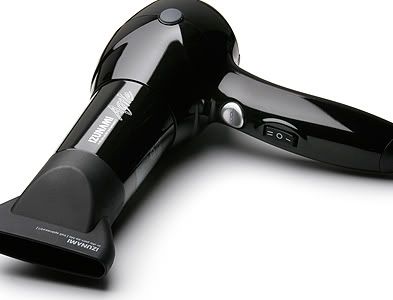
Photo of a blowdryer
Blowdryer

Blow-drying allows you to have more control over your hair, especially when you are planning to style it. How to blow dry hair does not have to be too complex. Here are tips you can follow:

Start from the roots to tips. It is common for women to blow dry only the wettest part of the hair. However, the correct way is to begin from the hair follicles to the tips of the strands.

This means you need to hold the nozzle over your head. Sometimes this may weaken the arms, particularly if they are short. If it is going to take a while to complete blow-drying, it is recommended you try to sit down.

Use a moisturizing shampoo. It is okay to shampoo your hair before blow-drying. However, if given a choice, utilize a moisturizing brand. Blow-drying uses intense heat, which may make the strands brittle, dry, and prone to breakage. The moisturizing shampoo will ensure your strands will have enough natural oil to maintain their shine and softness.

Divide the hair into different sections. You cannot blow dry your entire hair at the same time. You need to start at a particular point and move from left to right or vice versa until you can cover everything.

To make sure you can definitely dry every hair strand, divide your hair into different smaller portions. This way, you can clip the hairs you are still not blow-drying and focus your attention to a particular section only.

Make use of the brush. You need a brush to bring the hair strands much closer to the nozzle of the dryer. Find one that you can hold with a tight grip and can conveniently roll over your hair.

Practice. Blow-drying is an art. It requires patience and constant practice to perfect. Do not wait until blow-drying to know how to handle both the brush and the dryer simultaneously. At night, before you go to sleep, you can train yourself how to do the steps with more ease.

Avoid using the dryer at one section for a long time. Do not expose your hair to the nozzle for a very long period, or it will definitely burn the strands and suck out all the moisture. It is enough it removes the water out of the hair.

Maintain dampness. Leave the hair just dry enough to become more manageable. Again, you want to retain some moisture.

The Coolest Dog in the World